
Roles
Head of Product / Product Management, Product Design
Senior Director of User Experience & Research / Product Design
VP of User Experience & Research / Product Design
How I Lead: Building organizations that turn strategy into exceptional products and measurable outcomes
Overview
I believe great products are the result of great organizations.
Throughout my career, I’ve built and led teams responsible for turning complex customer and business problems into products people value. My role as a leader is to create the conditions for those teams to succeed: establishing a clear vision, hiring and developing great people, creating systems that help teams work effectively, and connecting customer insight to product and business strategy.
I began my career in software development before moving into UX and product design, giving me a perspective that spans both how products are built and how they are experienced. Over time, my leadership scope has expanded across the broader product experience, including product strategy, research and analytics, organizational design, design systems, and increasingly AI-enabled ways of working.
Across all of it, my philosophy is consistent: give talented people clarity, context, and autonomy, then build the environment that allows them to do their best work.
My Leadership Philosophy
I believe great leaders connect people, problems, and ideas. I lead with empathy, clarity, and pragmatism, helping teams navigate ambiguity while staying focused on customer needs, product strategy, and business outcomes.
Here are the core principles that guide my leadership:
Empowered teams do better work.
I create conditions where teams have the context, ownership, and support they need to make great decisions and do their best work.
Clarity Creates Momentum.
I turn fuzzy goals into action by shaping strategy, aligning teams, and creating clarity around what we’re trying to achieve.
Great Products Are a Team Sport.
I bring product, design, engineering, research, and business partners together around shared problems and outcomes rather than functional boundaries.
Putting It Into Practice
1. Building and Scaling High-Performing Teams
Great teams start with clarity around what they’re trying to accomplish and the autonomy to figure out how to get there.
At Henry Schein One, I grew the UX organization from four to more than 20 people, introduced a formal career ladder, developed leaders, and established clearer ownership across a complex portfolio of healthcare products. At Kroll, I helped unify previously siloed international UX teams around a shared vision and ways of working.
More recently at CourtReserve, my scope expanded across both product management and product design, bringing product strategy and experience design together around shared customer problems and business outcomes.
My Approach:
Build around outcomes, hire complementary strengths, create clarity and ownership, and give people room to lead.
2. Creating Systems That Scale
Process should make it easier for teams to do great work, not create more work for them.
Throughout my career, I’ve introduced design systems, accessibility programs, research repositories, analytics capabilities, and operating practices that reduce friction and help teams make better decisions. At Quorum, I led the rollout of a new design system and integrated accessibility into the product development workflow. At Henry Schein One, I implemented an AI-powered research repository that transformed hundreds of hours of customer interviews into accessible insights for product teams.
The goal is never process for its own sake. It’s creating just enough structure to help people move faster, collaborate more effectively, and make better decisions.
My approach:
Keep systems lightweight, collaborative, scalable, and clearly tied to an outcome.
3. Connecting Product Experience to Business Strategy
Product Experience leadership extends beyond any individual function. I partner closely with product, design, engineering, and business leaders to turn customer understanding into product strategy, priorities, roadmaps, and measurable outcomes.
I’ve worked directly with CEOs, founders, GMs, and executive teams to navigate ambiguous opportunities, align organizations around shared outcomes, and ensure that customer evidence informs business decisions. My role is not simply to advocate for the customer, but to connect what customers need with what the product and business need to accomplish.
My Approach:
Build alignment around shared outcomes, bring customer evidence into decisions, and translate strategy into action.
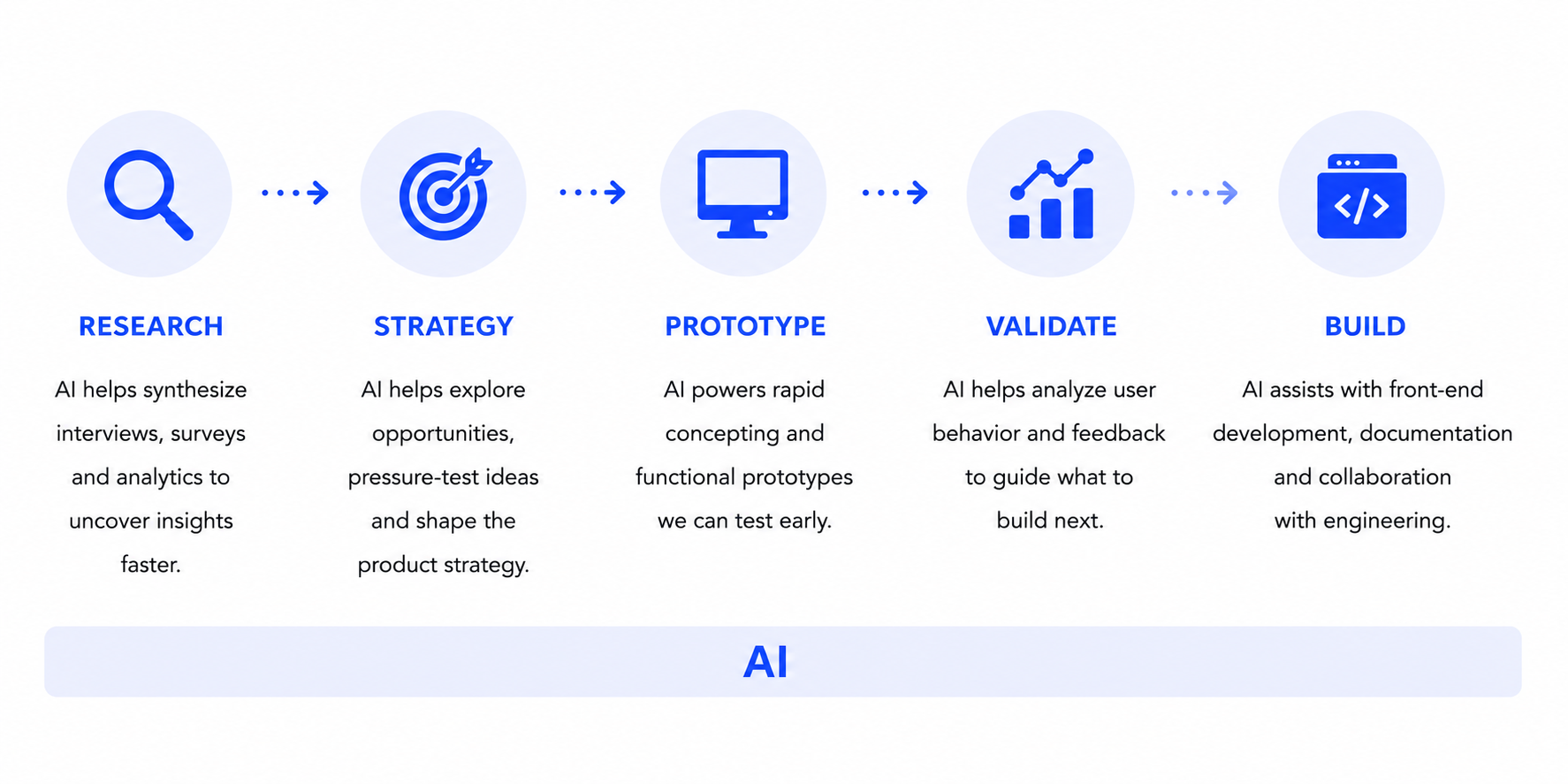
4. Building AI-Enabled Ways of Working
AI is changing more than the tools teams use. It’s changing how product organizations discover opportunities, make decisions, explore solutions, and build software.
I approach AI as an organizational capability rather than a standalone tool. I integrate AI throughout my own product development work while helping teams identify where it can meaningfully improve how they work.
The goal isn’t simply to make the existing process faster. It’s to rethink the process around what becomes possible when human judgment and AI work together.
My Approach:
Human-led, AI-accelerated. Use AI where it creates leverage while keeping people accountable for the decisions that matter.
Results I'm Proud Of:
- Grew monthly active users from 900K to 1.2M and improved booking conversion by 10% while leading Product Experience at CourtReserve.
- Increased customer satisfaction by 25% and reduced support tickets by 15% through product strategy and experience improvements at Henry Schein One.
- Grew the UX organization from 4 to 20+ at Henry Schein One while introducing clearer career paths, leadership structures, and ownership.
- Improved time-to-market by 90% for one product and 30% overall through scalable design systems at Henry Schein One.
- Improved design and development efficiency 5x at Quorum, contributing to a 30% reduction in product time-to-market.
- Increased adoption by 50% across North America, Europe, and Asia at Kroll through cross-functional product and experience leadership.
Closing Thoughts
For me, leadership isn’t about being the loudest voice in the room. It’s about creating clarity when things are ambiguous, listening with intention, making good decisions with imperfect information, and giving talented people the environment they need to succeed.
The tools and technologies we use will continue to change, particularly as AI reshapes how products are conceived and built. The fundamentals of leadership don’t. Build great teams, give them meaningful problems to solve, connect their work to a clear strategy, and continually evolve how the organization works.
